Slides · roll 1956 Q3Diapositives · rouleau 1956 Q3
Isfahan, Shiraz, Persepolis, NainIspahan, Shiraz, Persépolis, Nain
Descriptions of 21 slides, written from the images and from what is written on the box. Place identifications are hypotheses, marked "?" where uncertain.
Description de 21 diapositives faite à partir des images et de ce qui est écrit sur la boîte. Les identifications de lieux sont des hypothèses, marquées « ? » quand elles sont incertaines.
More about this rollEn savoir plus sur ce rouleau
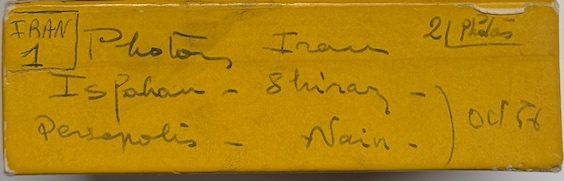
What is written on the box (in French)
- Persépolis, août 56
- Band-e Amir près Persépolis, août 56
- le désert montagneux entre Ispahan et Téhéran Oct. 56
- le desert entre Isp et Teheran Oct. 56
- Nuage et desert en avion Oct 56
- Ispahan, place Shah Oct 56
- Persepolis Oct 56
- Persépolis, porte d'un palais
- Pont a Ispahan Oct. 56
- Pont a Ispahan Oct 56
- Ispahan Palais Ali Qapu Oct. 56
- Ispahan Palais Ali Qapu Oct. 56
- Puits pres Shiraz Automne 56
- Shiraz Tombeau de Hafez Oct 56
- Mosquée Lotfollah, Ispahan Oct. 56
- les briques séchées au soleil Nain Oct. 56
- Château de Nain, oct. 56
- Nain Mars 57
- Ispahan vue d'avion
- Aeroport Ispahan Mars 57
- Ispahan mosquée séminaire mars 57
Notes on the places and journeys (historical context, not Dad's memories)
The places
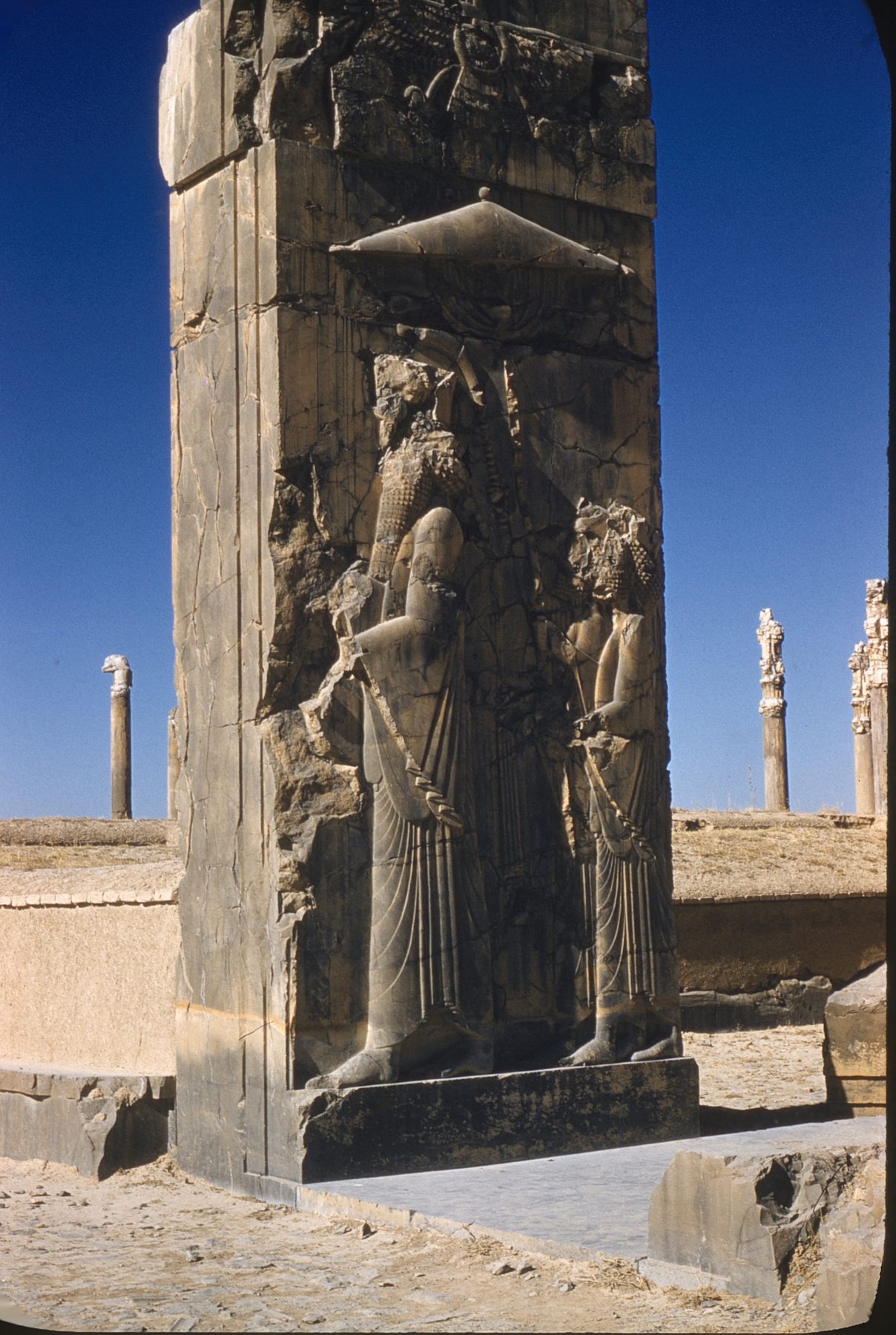
- Persepolis (1, 2, 7, 8): ceremonial capital of the Achaemenids, founded by Darius I around 518 BC and burnt by Alexander in 330 BC. The excavations of the Oriental Institute of Chicago (1930s) had just cleared the terrace; UNESCO World Heritage in 1979. Photo 8 shows the doorway of one of the palaces on the terrace, with the king under a parasol; this type of relief exists both at the Tachara (Darius's palace) and at the Hadish (Xerxes's palace): which one is unconfirmed.
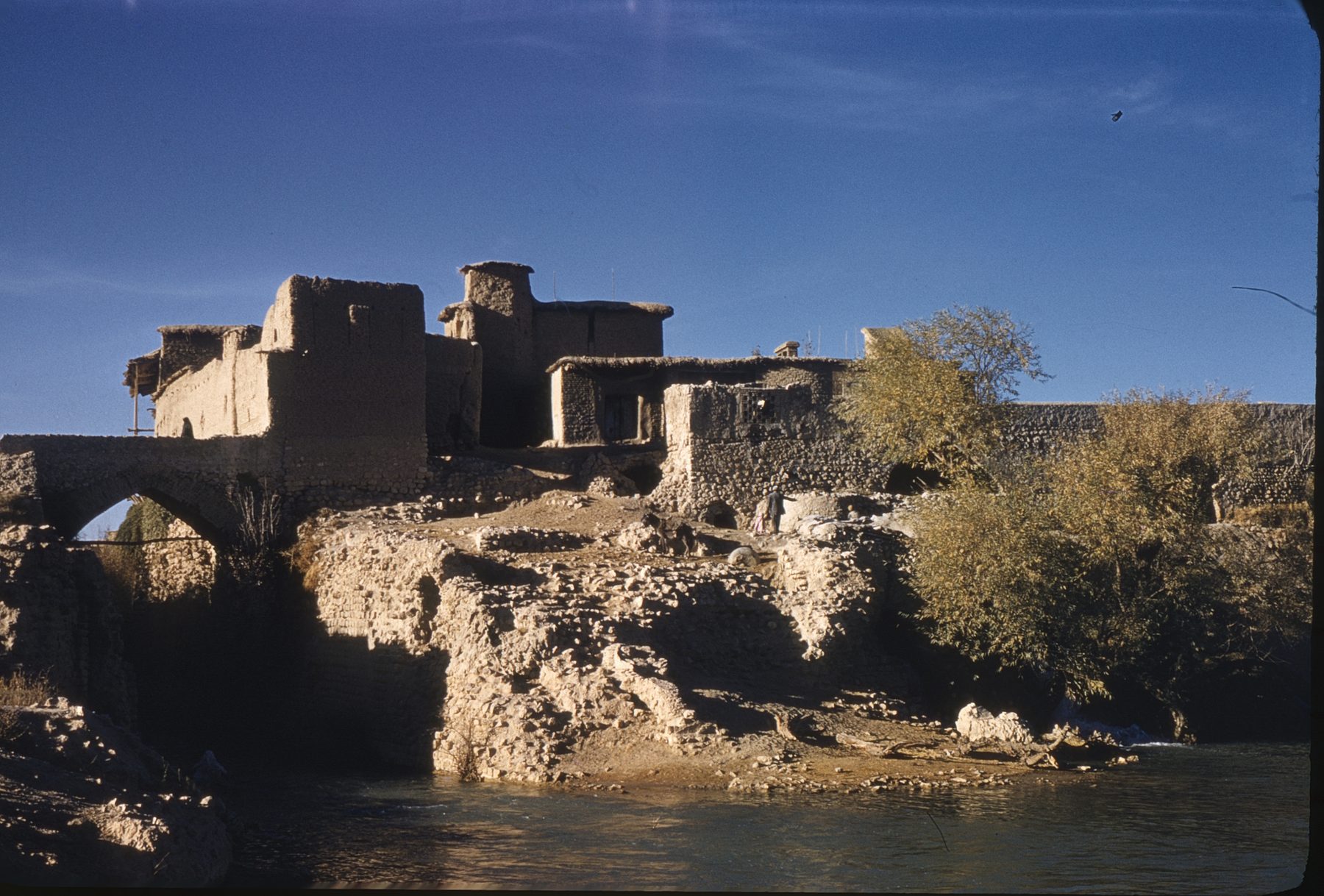
- Band-e Amir (2): a medieval dam (10th century) on the Kor river, near Persepolis.
- Isfahan (3, 4, 6, 9-12, 15, 19-21): Shah Square (today Naqsh-e Jahan / Imam Square), laid out by Shah Abbas I in the early 17th century, with the Ali Qapu palace and the Sheikh Lotfollah mosque (1603-1619). The "bridges of Isfahan" (9, 10) are probably the Si-o-se-pol or the Khaju bridge.
- Shiraz (13, 14): the tomb of the poet Hafez (died 1390); the pavilion Dad photographed dates from the 1930s (architect André Godard).
- Nain (16-18): an oasis of the central desert, with the pre-Islamic fortress of Narin Qaleh and many buildings of sun-dried mud brick.
The flights
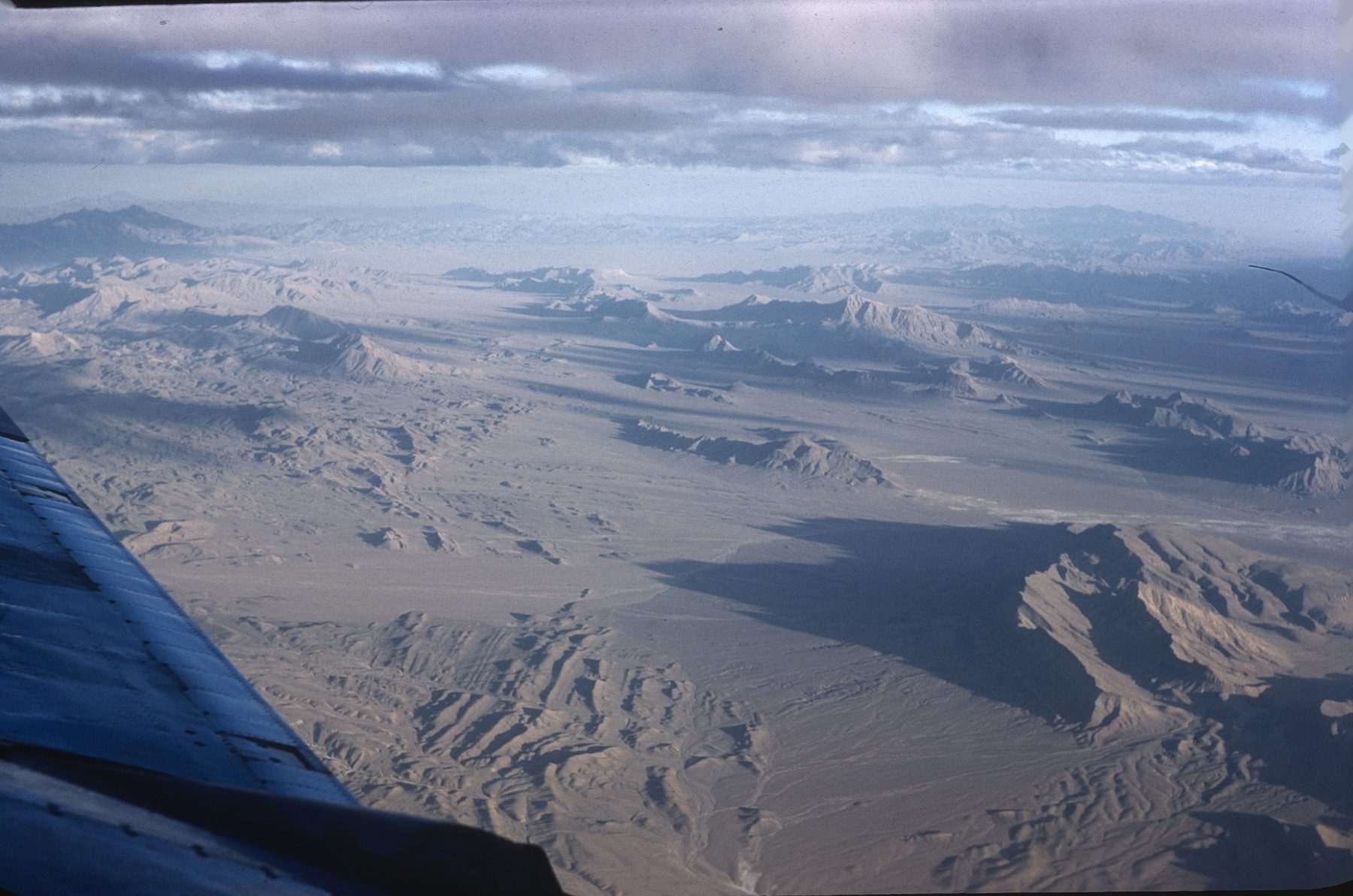
What Dad's captions say: mountainous desert between Isfahan and Tehran from a plane (3, 4, 5, Oct. 56), Isfahan from the air (19), Isfahan airport (20, March 57). Context: in the 1950s Iranian Airways flew Tehran – Isfahan – Shiraz (– Bushehr) with Douglas DC-3s; a 1957 timetable confirms it. Unpressurised aircraft flew low, hence these views of desert and clouds (a hypothesis, to be confirmed). We do not know which airline Dad used, nor on which flights. The captions suggest at least two stays in Iran (Aug. 56, then Oct. 56 and March 57): Persepolis appears in the first two.
Ce qui est écrit sur la boîte
- Persépolis, août 56
- Band-e Amir près Persépolis, août 56
- le désert montagneux entre Ispahan et Téhéran Oct. 56
- le desert entre Isp et Teheran Oct. 56
- Nuage et desert en avion Oct 56
- Ispahan, place Shah Oct 56
- Persepolis Oct 56
- Persépolis, porte d'un palais
- Pont a Ispahan Oct. 56
- Pont a Ispahan Oct 56
- Ispahan Palais Ali Qapu Oct. 56
- Ispahan Palais Ali Qapu Oct. 56
- Puits pres Shiraz Automne 56
- Shiraz Tombeau de Hafez Oct 56
- Mosquée Lotfollah, Ispahan Oct. 56
- les briques séchées au soleil Nain Oct. 56
- Château de Nain, oct. 56
- Nain Mars 57
- Ispahan vue d'avion
- Aeroport Ispahan Mars 57
- Ispahan mosquée séminaire mars 57
Notes sur les lieux et les voyages (contexte historique, pas des souvenirs de Papa)
Les lieux
- Persépolis (1, 2, 7, 8) : capitale cérémonielle achéménide fondée par Darius Ier vers 518 av. J.-C., incendiée par Alexandre en 330 av. J.-C. Les fouilles de l'Oriental Institute de Chicago (années 1930) venaient de dégager la terrasse ; classé à l'UNESCO en 1979. La photo 8 montre la porte d'un des palais de la terrasse, avec le roi sous un parasol ; ce type de relief existe au Tachara (palais de Darius) comme au Hadish (palais de Xerxès) : lequel, non confirmé.
- Band-e Amir (2) : barrage médiéval (Xe siècle) sur la rivière Kor, près de Persépolis.
- Ispahan (3, 4, 6, 9-12, 15, 19-21) : la place Shah (aujourd'hui place Naqsh-e Jahan / Imam), aménagée par Shah Abbas Ier au début du XVIIe siècle, avec le palais Ali Qapu et la mosquée Cheikh Lotfollah (1603-1619). Les « ponts d'Ispahan » (9, 10) sont probablement le Si-o-se-pol ou le pont Khaju.
- Shiraz (13, 14) : le tombeau du poète Hafez (mort en 1390) ; le pavillon que Papa a photographié date des années 1930 (architecte André Godard).
- Nain (16-18) : oasis du désert central, avec la forteresse de Narin Qaleh (pré-islamique) et de nombreux bâtiments en briques crues séchées au soleil.
Les trajets en avion
Ce que disent les légendes de Papa : désert montagneux entre Ispahan et Téhéran en avion (3, 4, 5, oct. 56), Ispahan vue d'avion (19), aéroport d'Ispahan (20, mars 57). Contexte : dans les années 1950, la compagnie Iranian Airways desservait Téhéran – Ispahan – Chiraz (– Bouchehr) en Douglas DC-3 ; un horaire de 1957 le confirme. Les avions non pressurisés volaient bas, d'où ces vues du désert et des nuages (hypothèse, à confirmer). On ne sait pas quelle compagnie Papa a utilisée, ni sur quels vols. Les légendes suggèrent au moins deux séjours en Iran (août 56, puis octobre 56 et mars 57) : Persépolis apparaît dans les deux premiers.
 1
Carved stone pillar showing two standing figures under a canopy (a doorway jamb); columns of the terrace behind.
Pilier de pierre sculpté de deux personnages debout sous un dais (jambage de porte) ; colonnes de la terrasse en arrière-plan.
 2
Mud-brick buildings on a rock at the water's edge, small arched bridge, yellowing trees (the Band-e Amir dam?).
Bâtiments en briques crues sur un rocher au bord de l'eau, petit pont voûté, arbres jaunis (le barrage de Band-e Amir ?).
 3
View from the window: a blue-tinted wing above desert mountains and dry riverbeds, clouds in the distance.
Vue depuis le hublot : aile d'avion bleutée au-dessus d'un désert de montagnes et de lits de rivière à sec, nuages au loin.
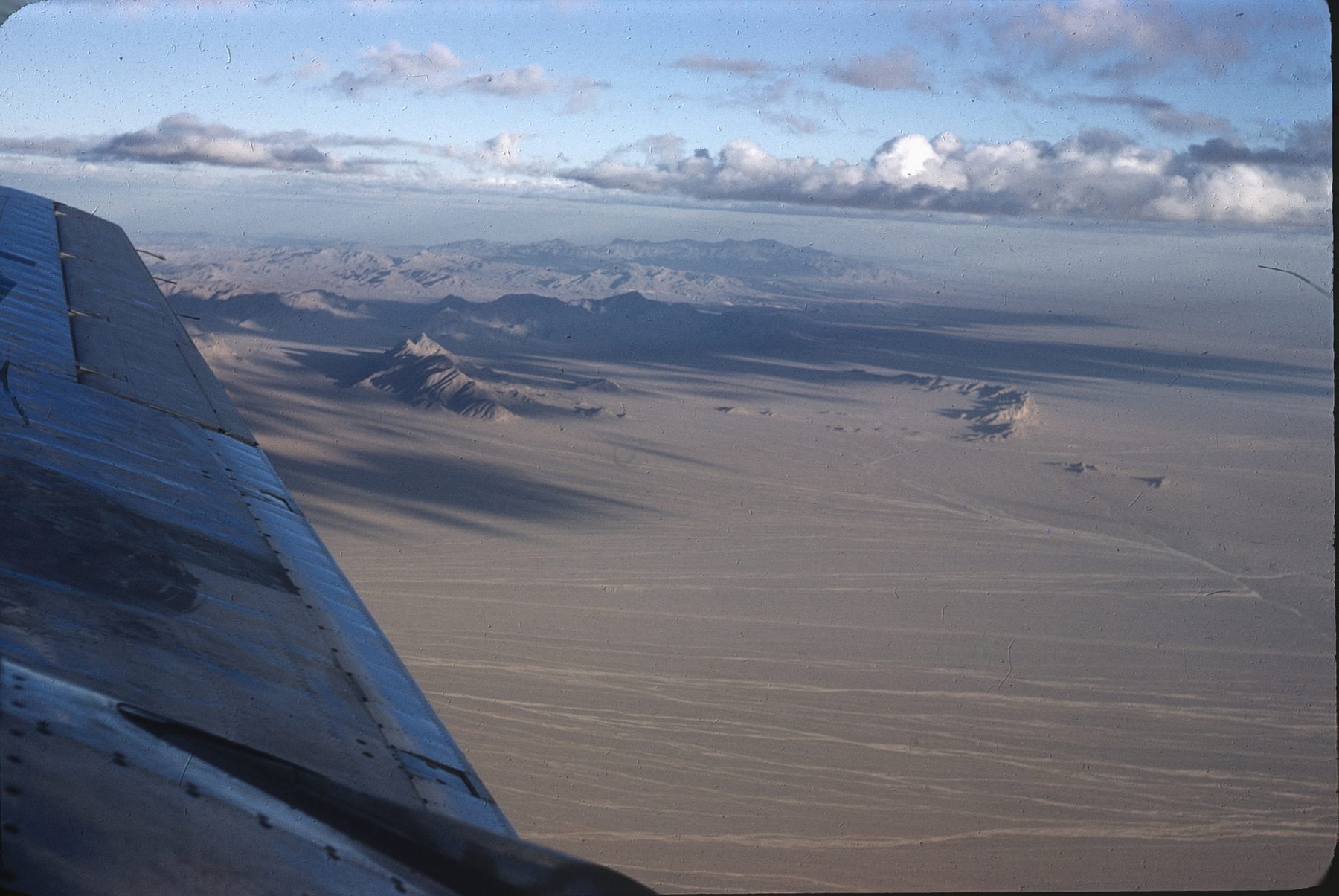 4
Same flight: wing on the left, a desert plain streaked with tracks, cloud shadows.
Même vol : l'aile à gauche, plaine désertique striée de traces de pistes, ombres des nuages.
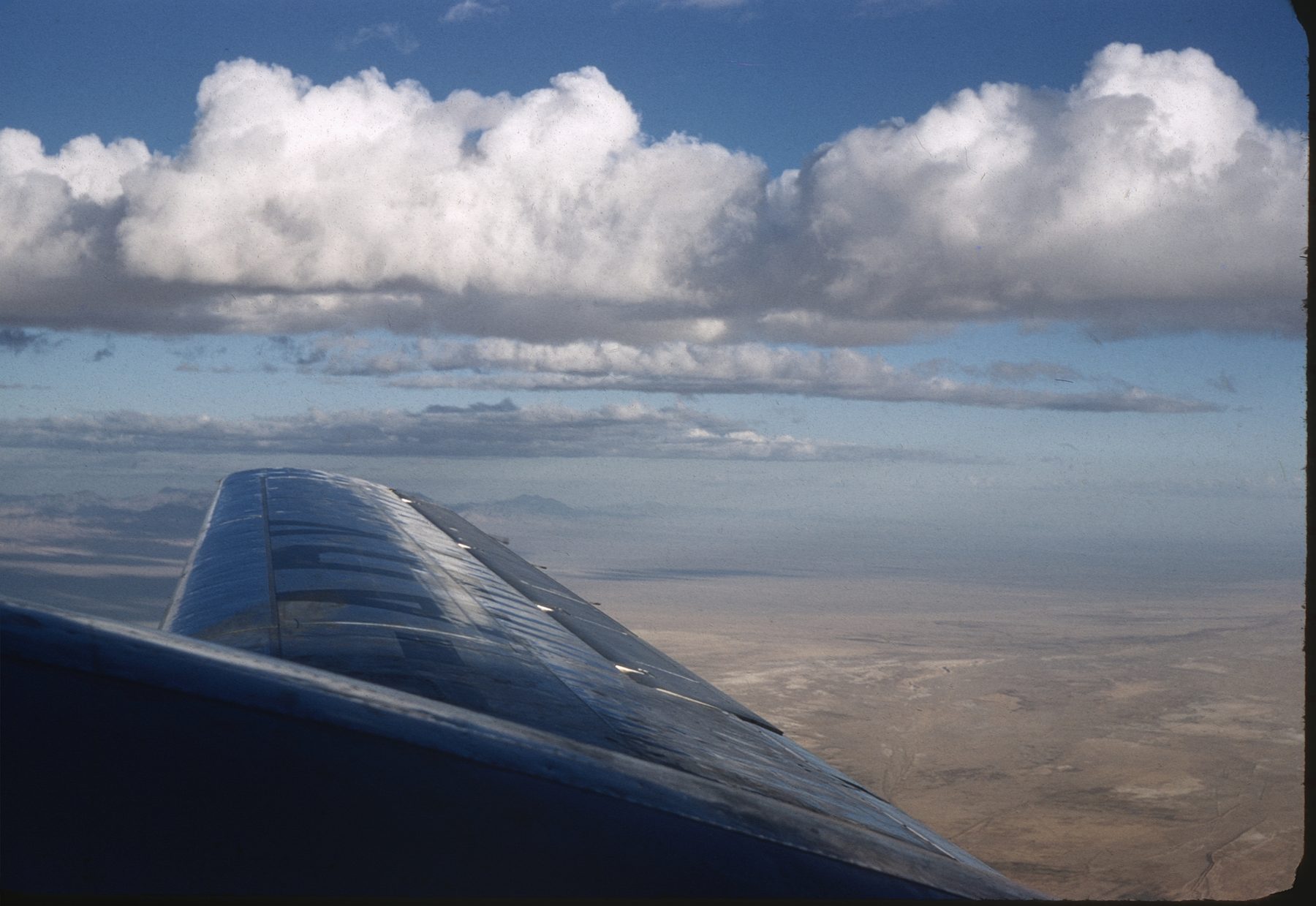 5
Big white cumulus on the horizon, wing tip in the foreground, brown plain below.
Gros cumulus blancs à l'horizon, extrémité de l'aile au premier plan, plaine brune sous le ciel.
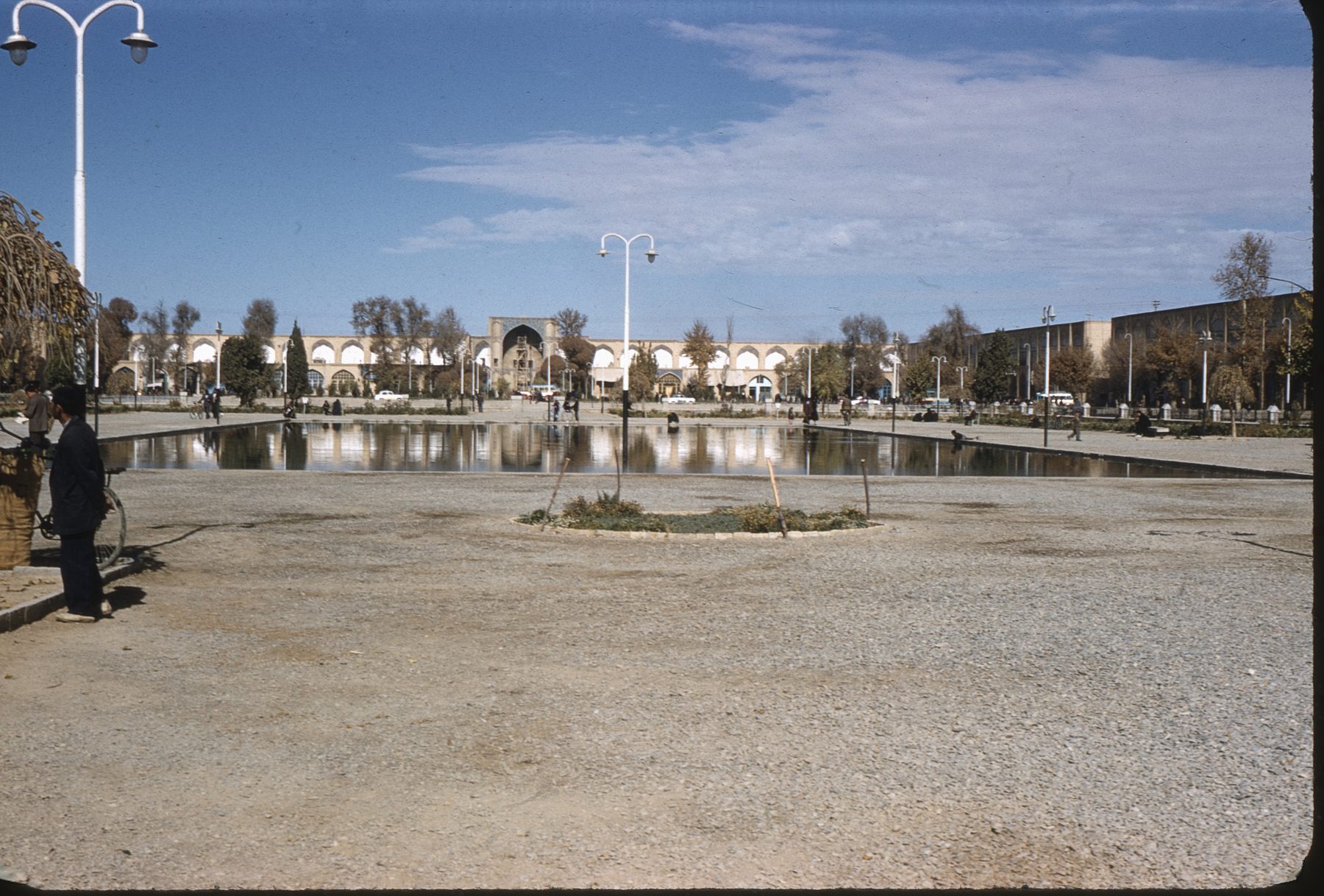 6
Large gravel square with a big rectangular pool, double-globe street lamps, arcades at the back; a man standing on the left.
Vaste place gravillonnée avec un grand bassin rectangulaire, lampadaires à deux globes, arcades au fond ; un homme debout à gauche.
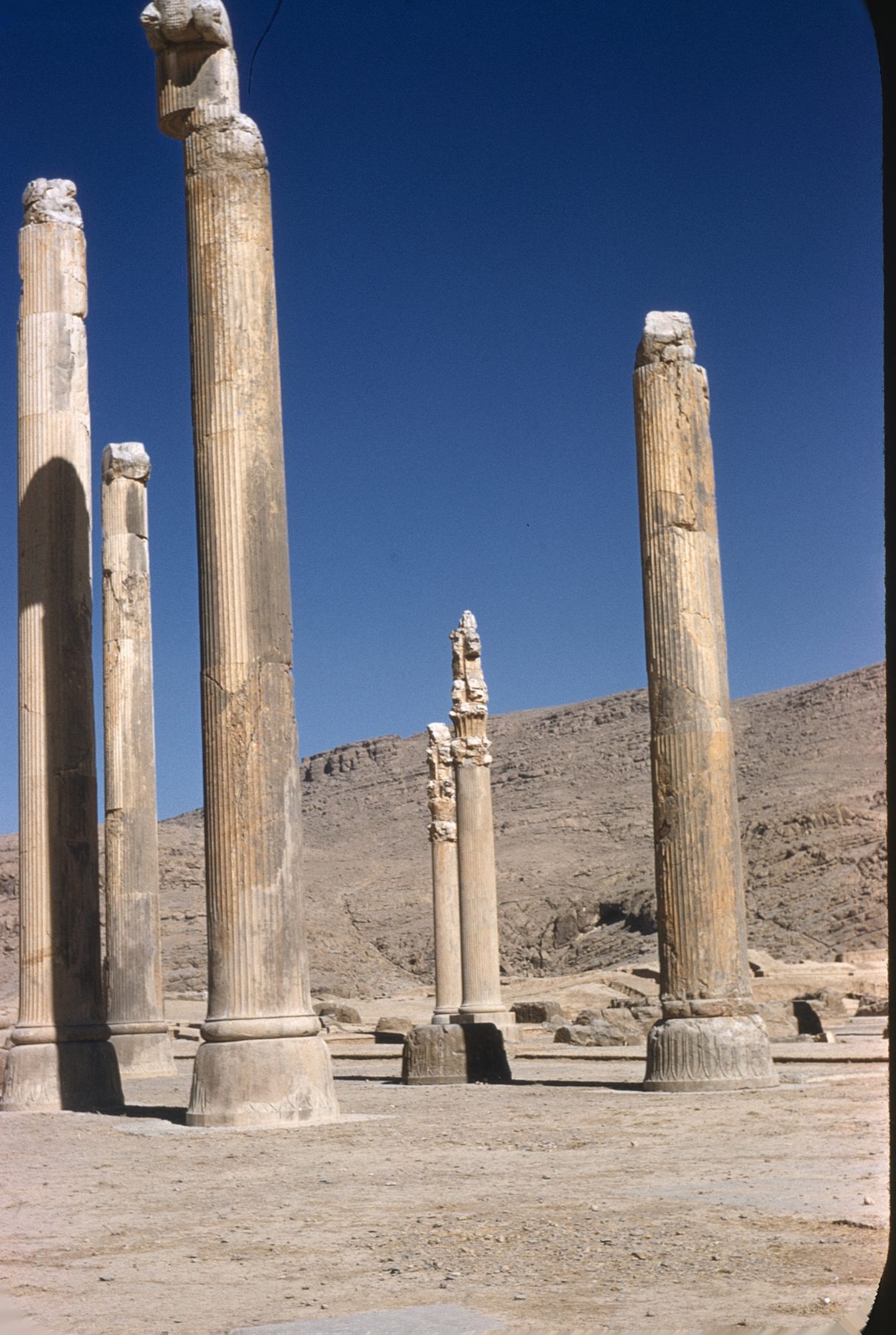 7
Four slender columns of the terrace, the tallest still topped by part of an animal capital; bare hills behind (vertical slide).
Quatre colonnes élancées de la terrasse, la plus haute encore coiffée d'un fragment de chapiteau animal ; collines arides derrière (diapositive verticale).
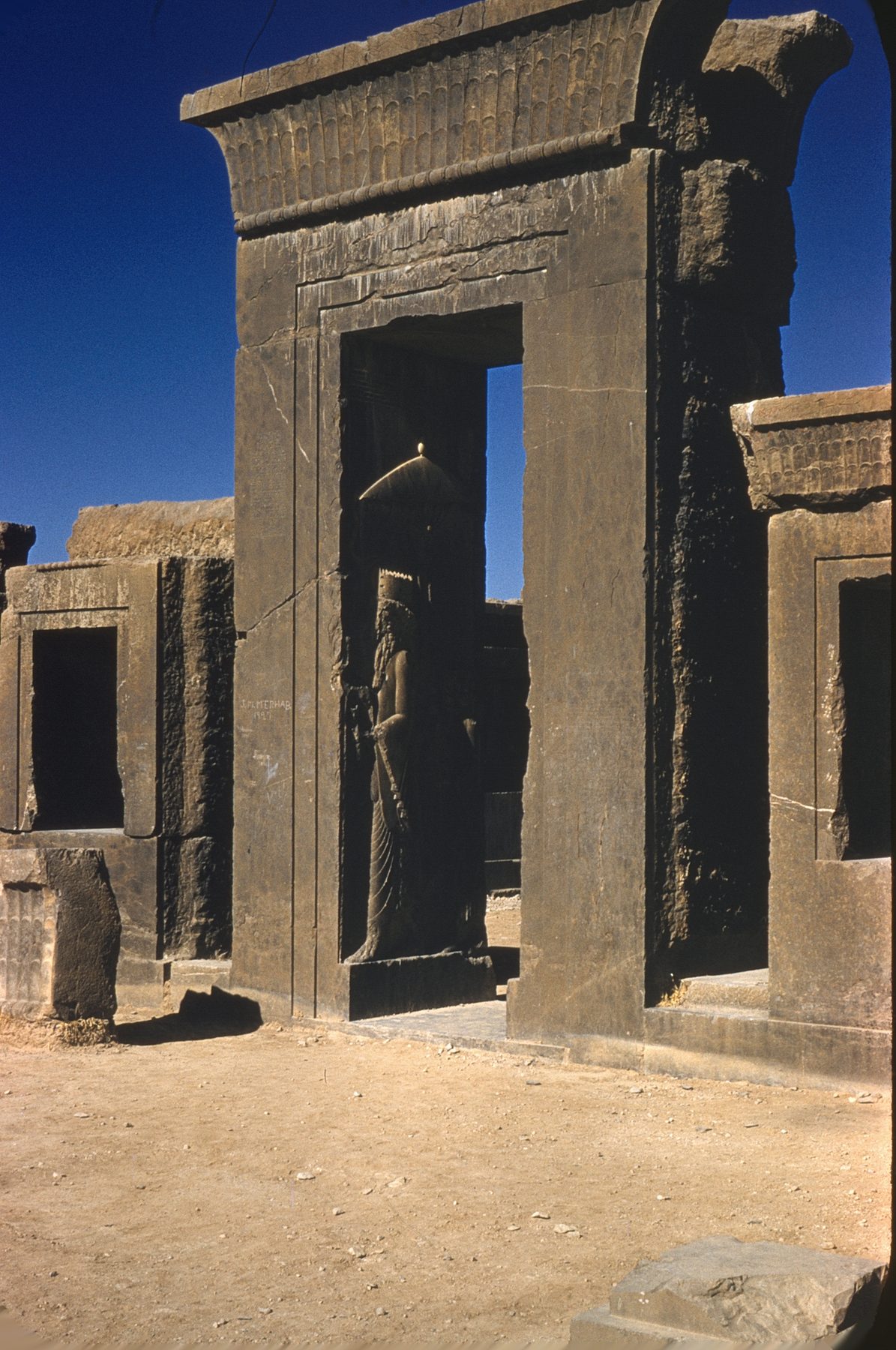 8
Stone doorway of a palace with a relief of the king under a parasol on the jamb; more doorposts on the left (vertical slide).
Porte de pierre d'un palais avec, sur le jambage, un relief de roi sous un parasol ; autres montants à gauche (diapositive verticale).
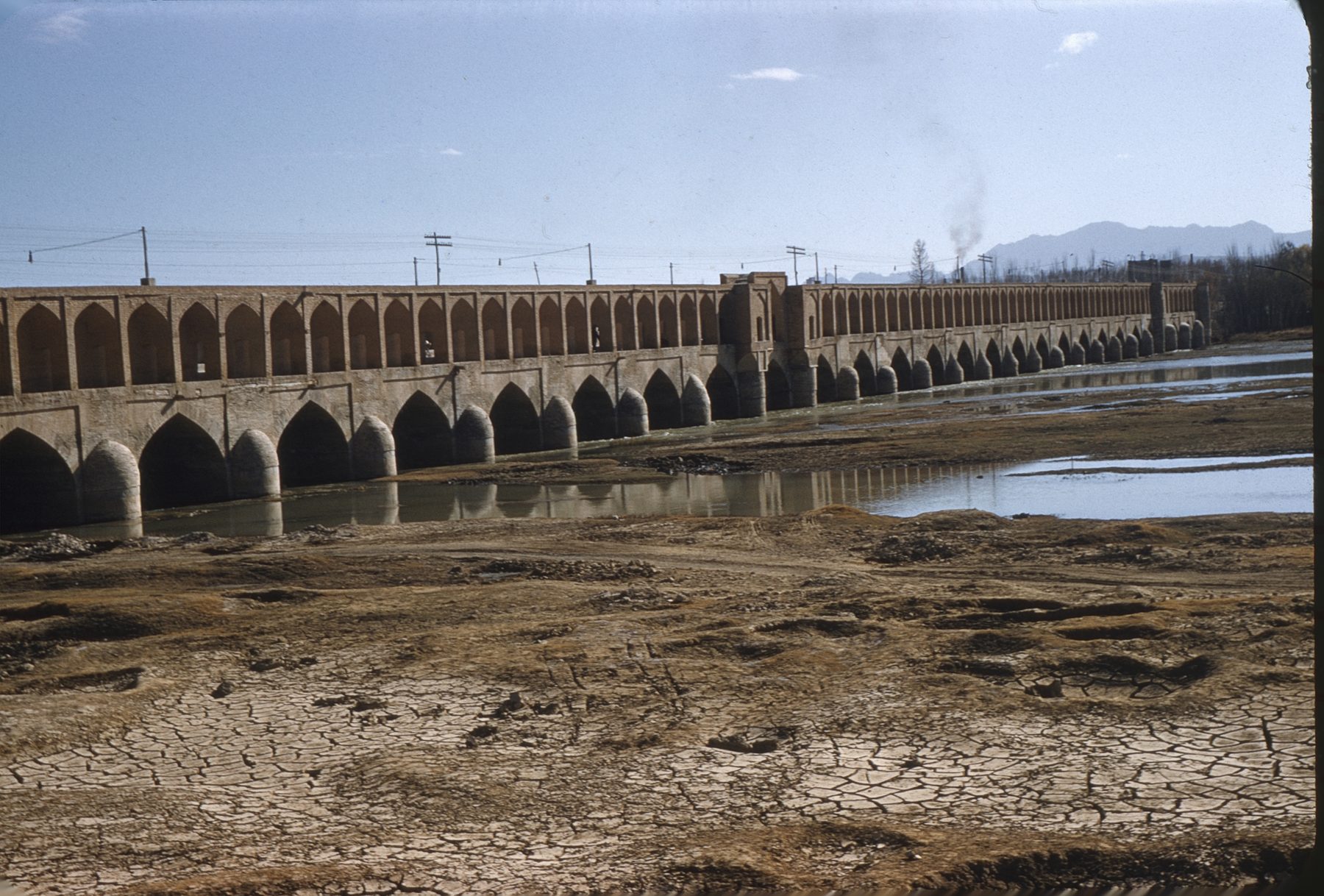 9
Long arcaded bridge (Si-o-se-pol?) over a dried-up riverbed, cracked mud in the foreground, smoke in the distance.
Long pont à arcades (Si-o-se-pol ?) au-dessus d'un lit de rivière asséché, boue craquelée au premier plan, fumée au loin.
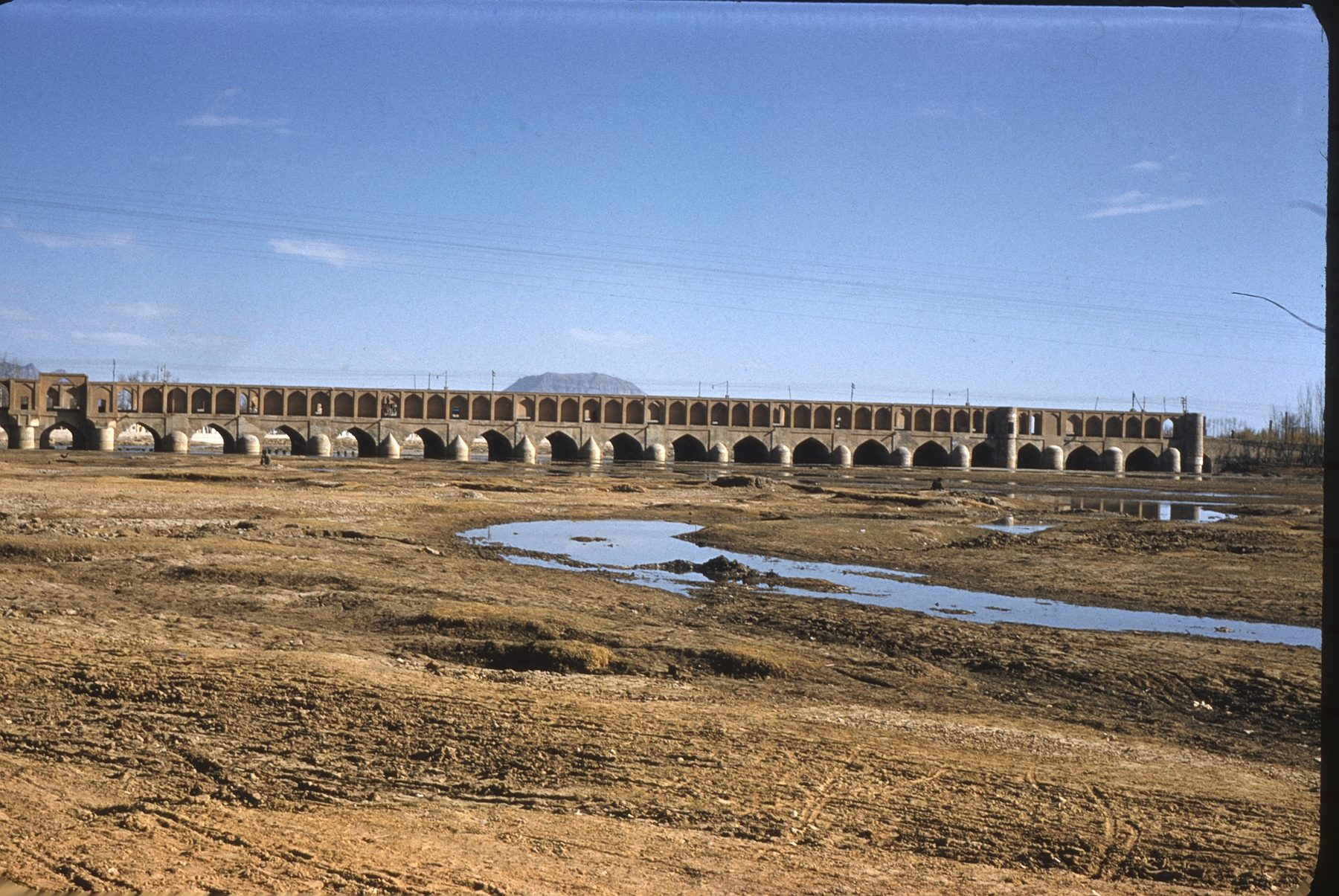 10
The same bridge from further away, yellow plain, puddles, power lines and a mountain on the horizon.
Même pont vu de plus loin, plaine jaune, flaques, fils électriques et montagne à l'horizon.
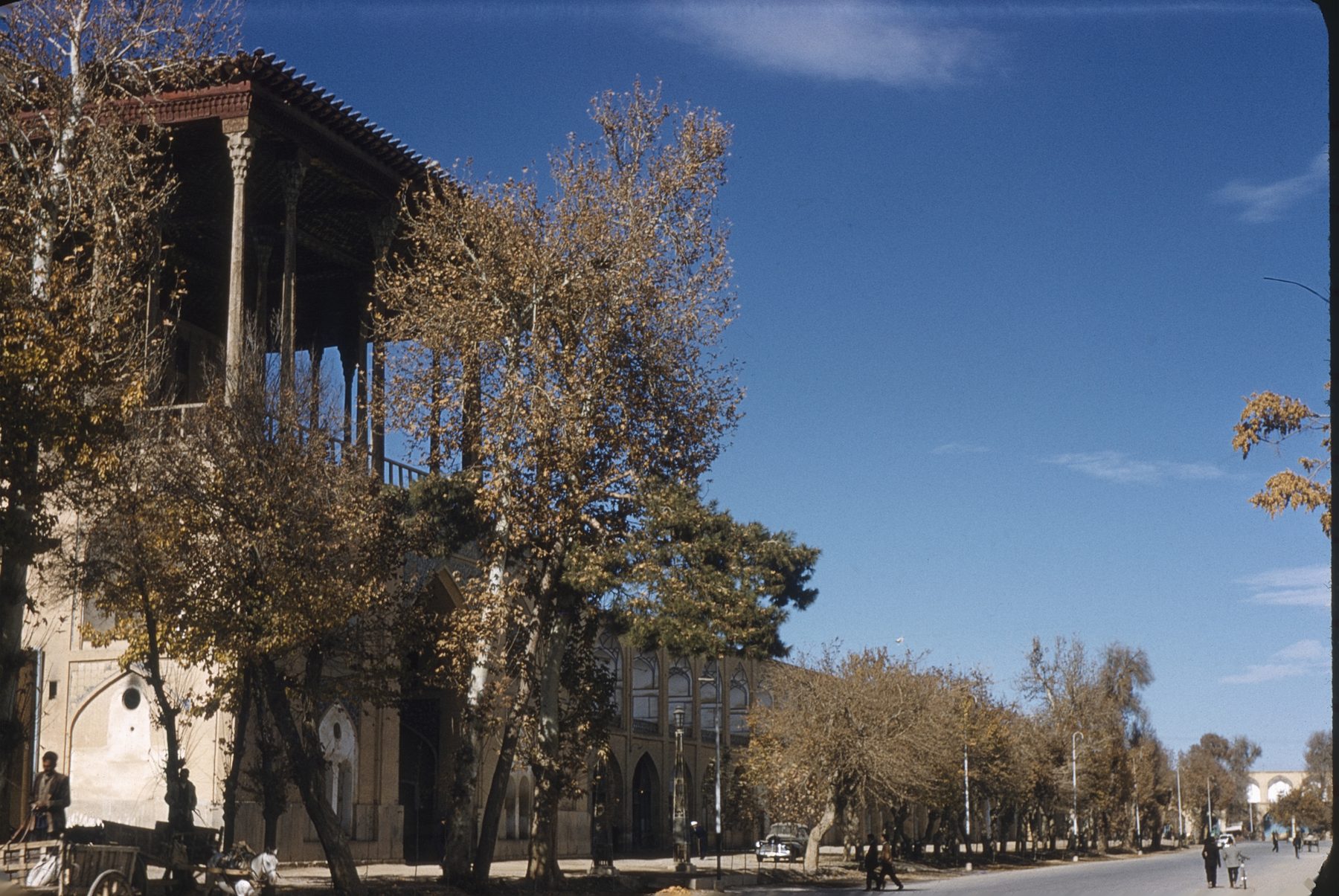 11
Wooden columns of the Ali Qapu terrace on the left, autumn trees, an arcaded avenue; a few passers-by.
Colonnes de bois de la terrasse d'Ali Qapu à gauche, arbres d'automne, avenue bordée d'arcades ; quelques passants.
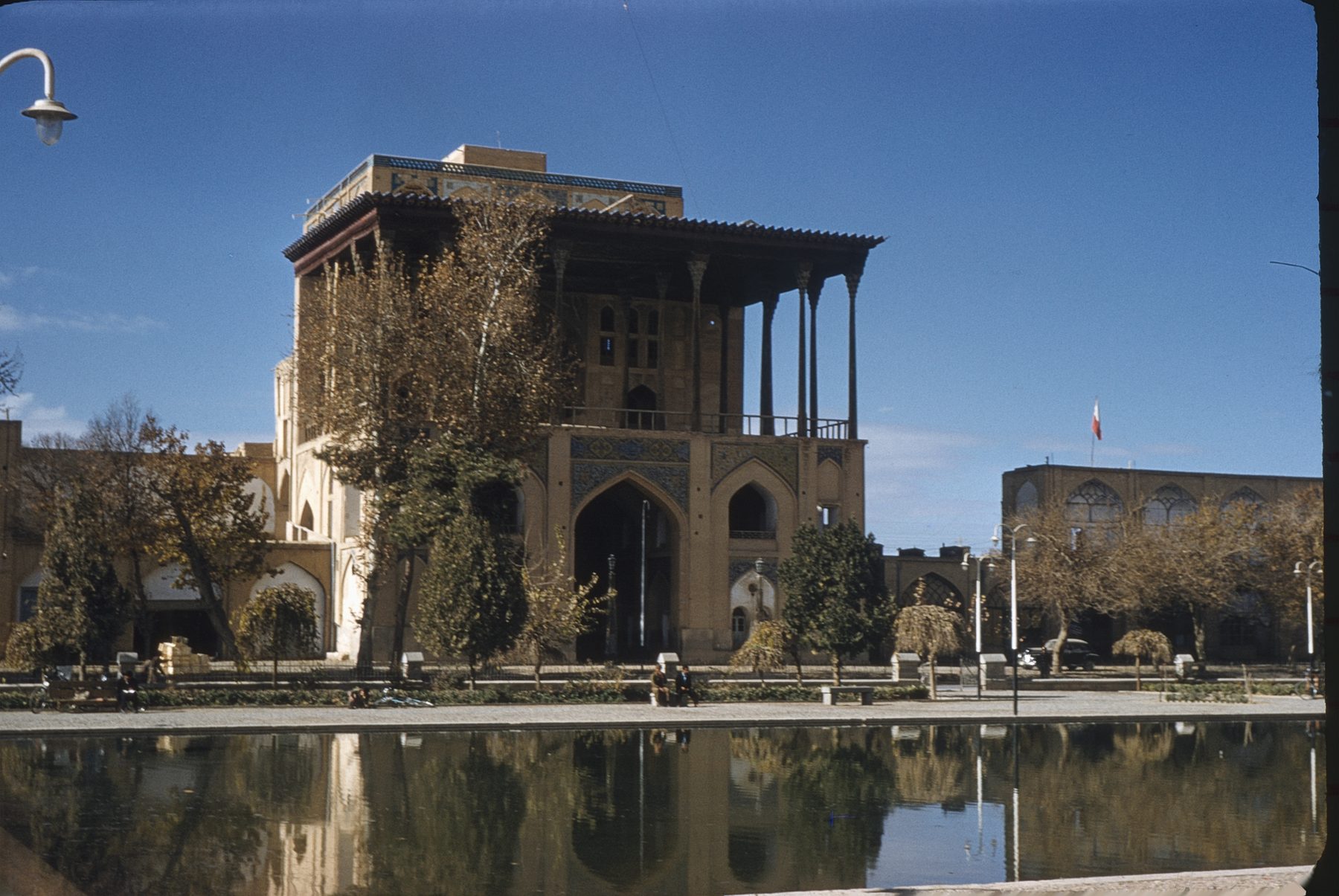 12
Facade of the Ali Qapu palace with its portico, trees and a lamp post, reflections in the pool in the foreground, a small Iranian flag.
Façade du palais Ali Qapu avec son portique, arbres et lampadaire, reflets dans le bassin au premier plan, petit drapeau iranien.
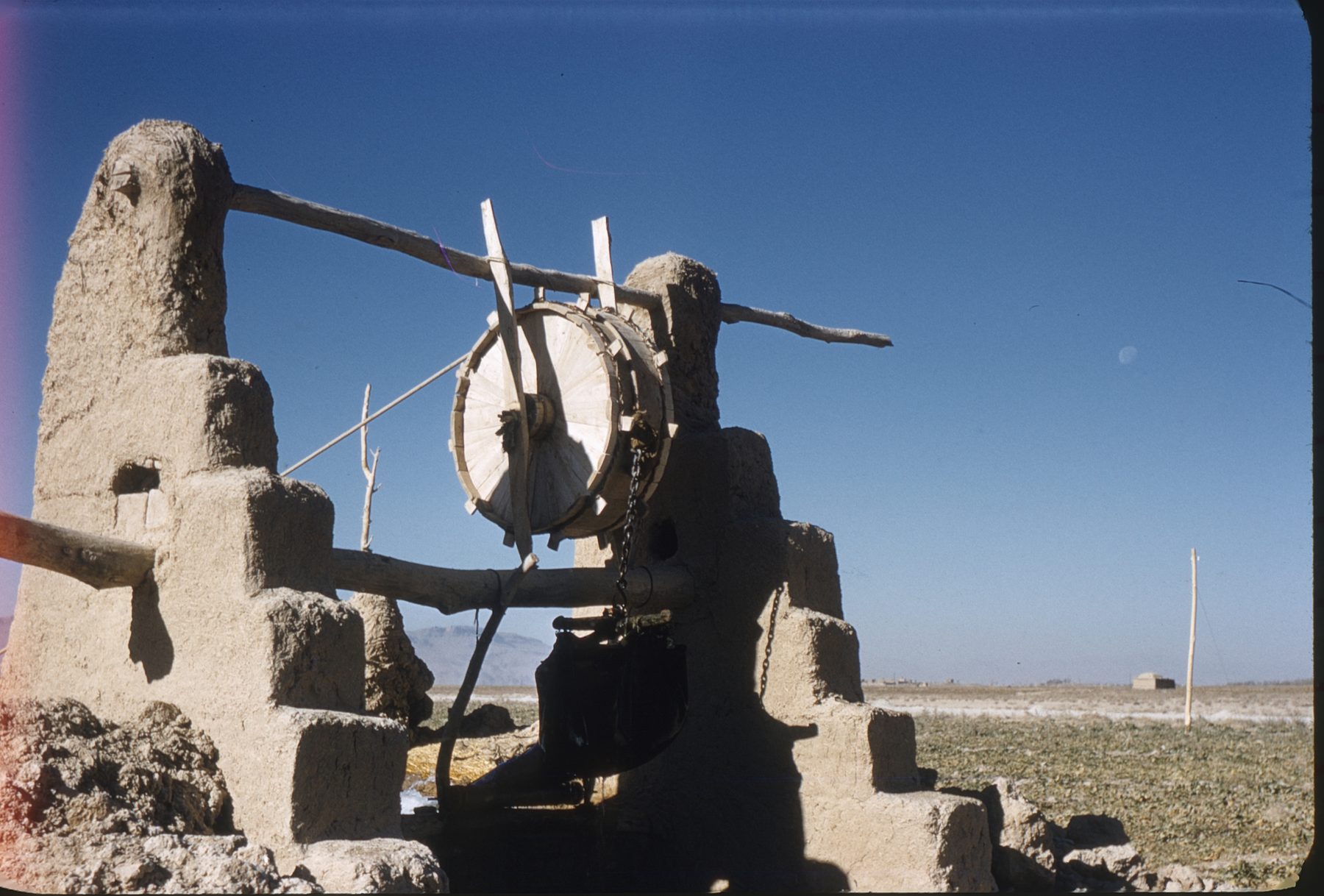 13
Mud-brick well topped by a wooden windlass, green plain and a pole in the distance; a pink light leak along the left edge.
Puits en briques crues surmonté d'un treuil en bois, plaine verte et poteau au loin ; liseré rose de voile lumineux sur le bord gauche.
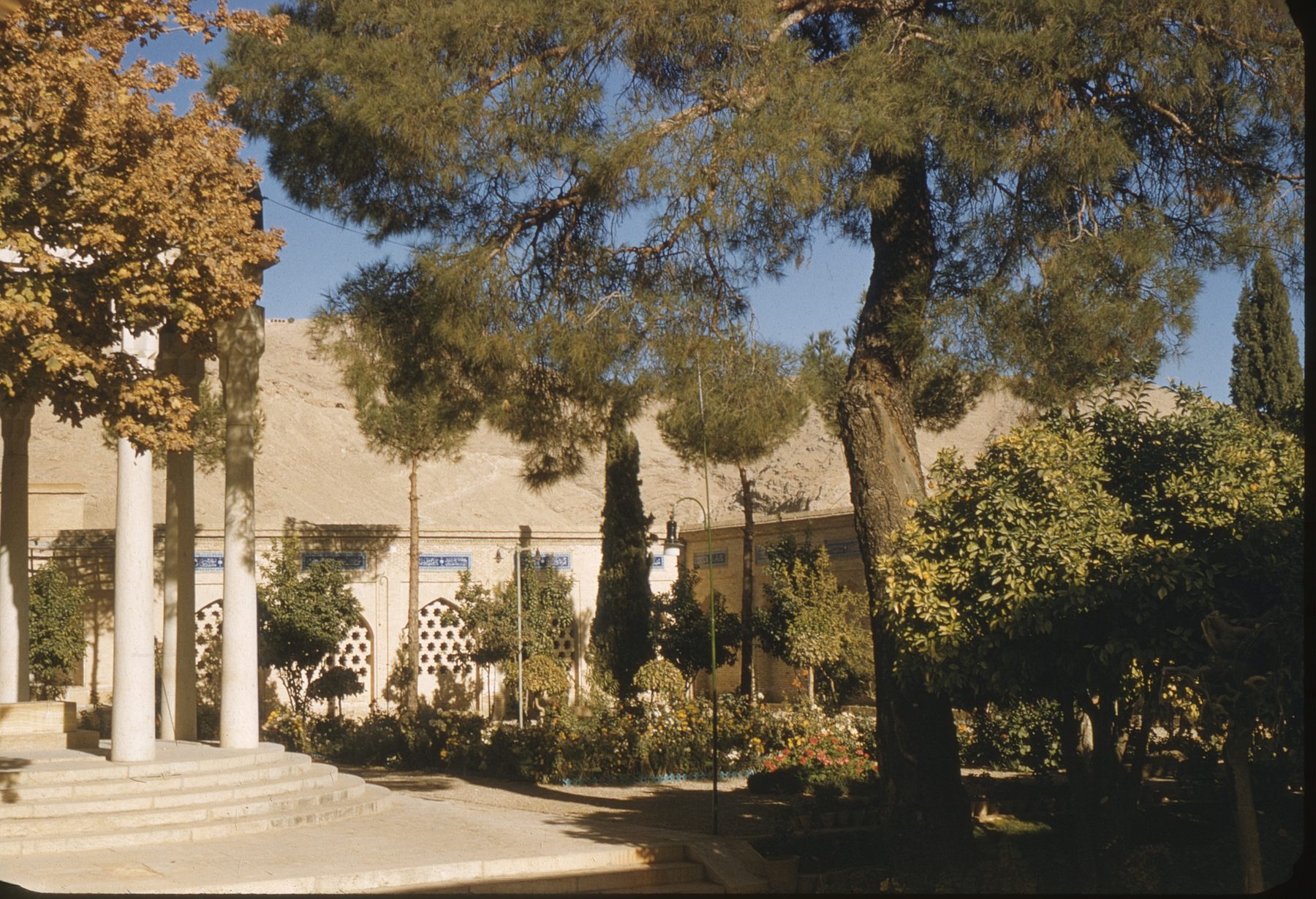 14
Pavilion with slender columns in a garden of pines, cypress and autumn trees, a flight of steps (the tomb of Hafez).
Pavillon à fines colonnes dans un jardin de pins, de cyprès et d'arbres d'automne, escalier de marches (tombeau de Hafez).
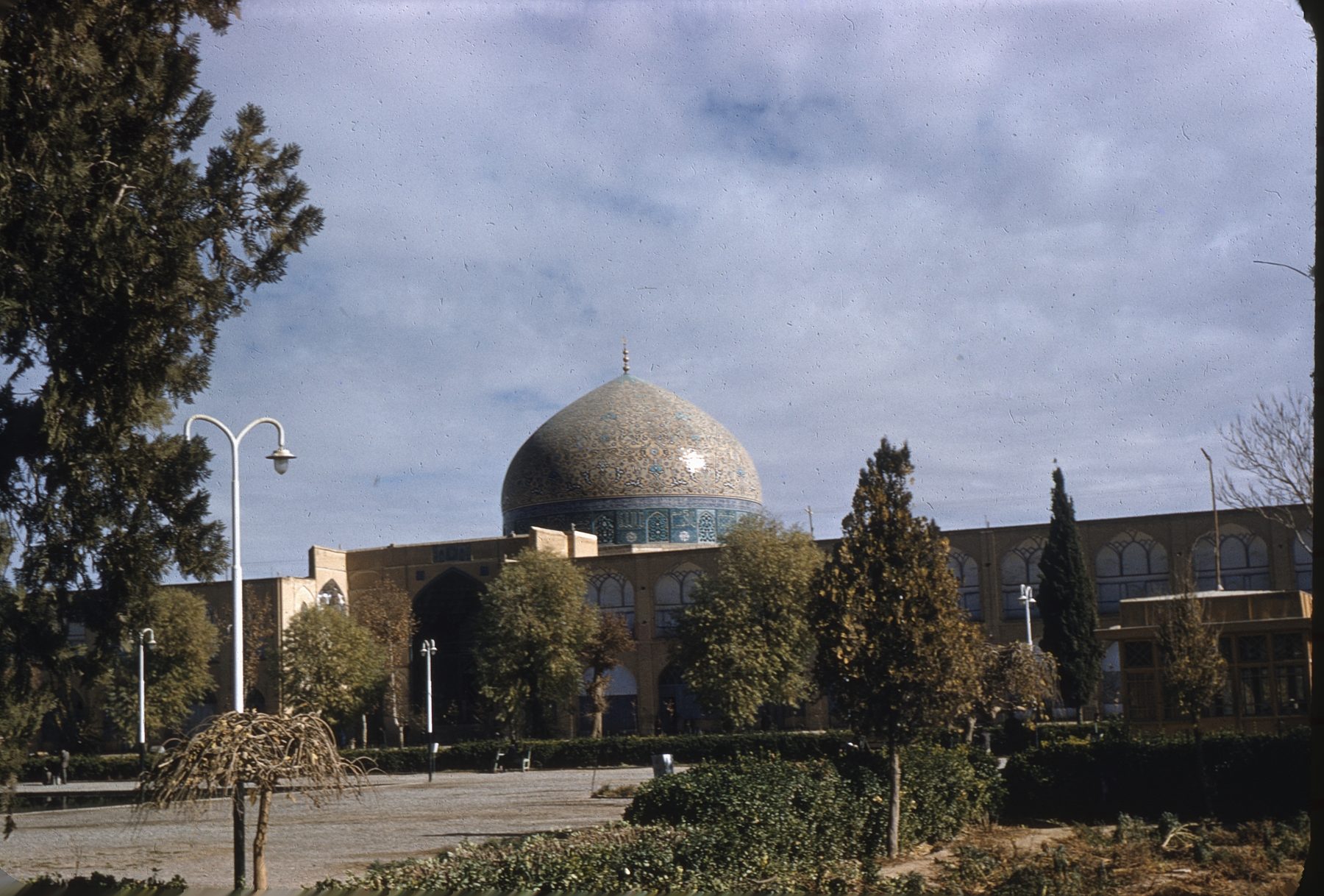 15
Blue-tiled dome of the Sheikh Lotfollah mosque behind trees, a street lamp and a yellow-brick facade.
Dôme à carreaux bleus de la mosquée Cheikh Lotfollah derrière les arbres, lampadaire et façade en briques jaunes.
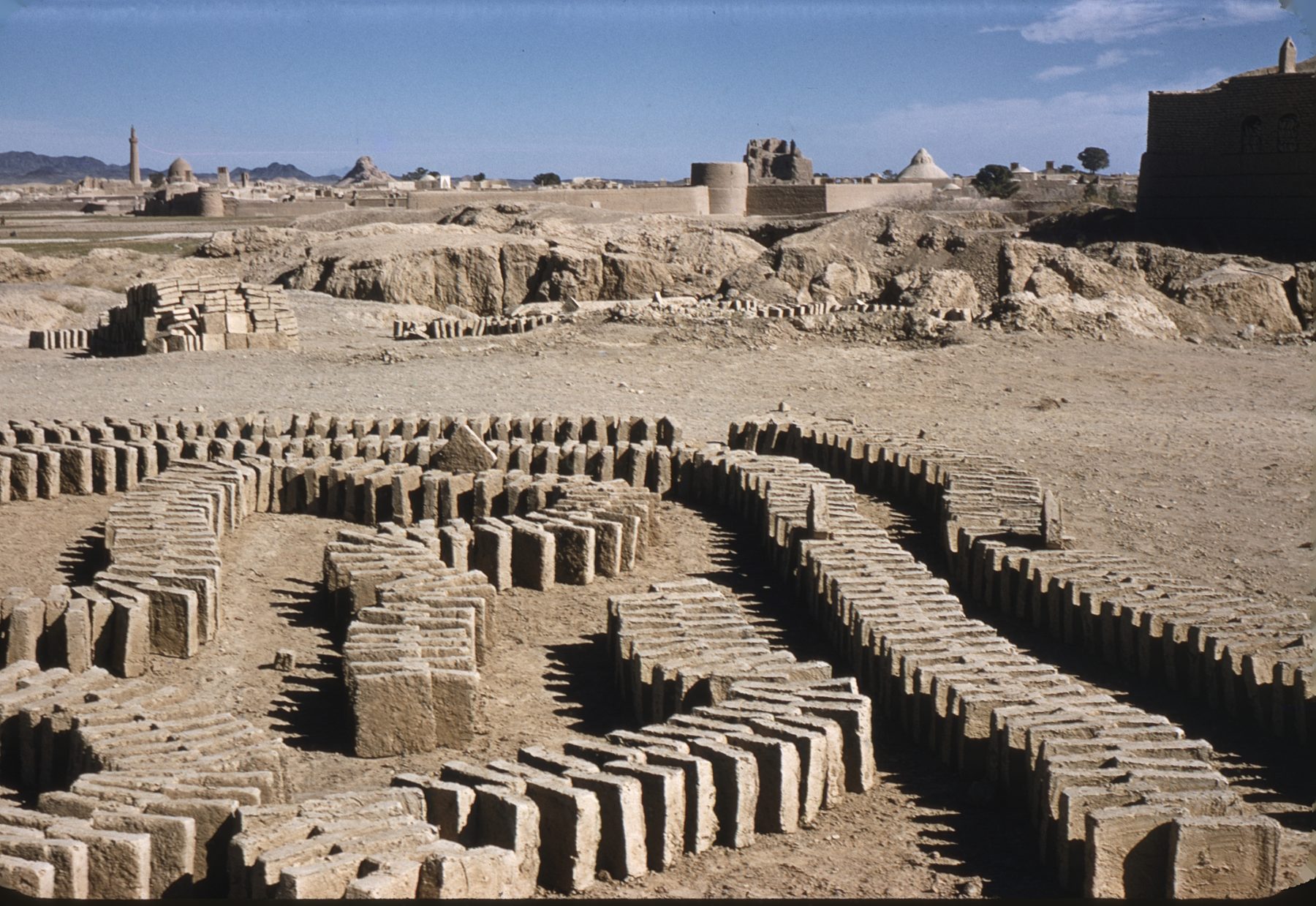 16
Rows of mud bricks stood on edge in curved lines to dry in the sun, ruined walls in the distance.
Rangées de briques crues dressées en lignes courbes pour sécher au soleil, remparts en ruine au loin.
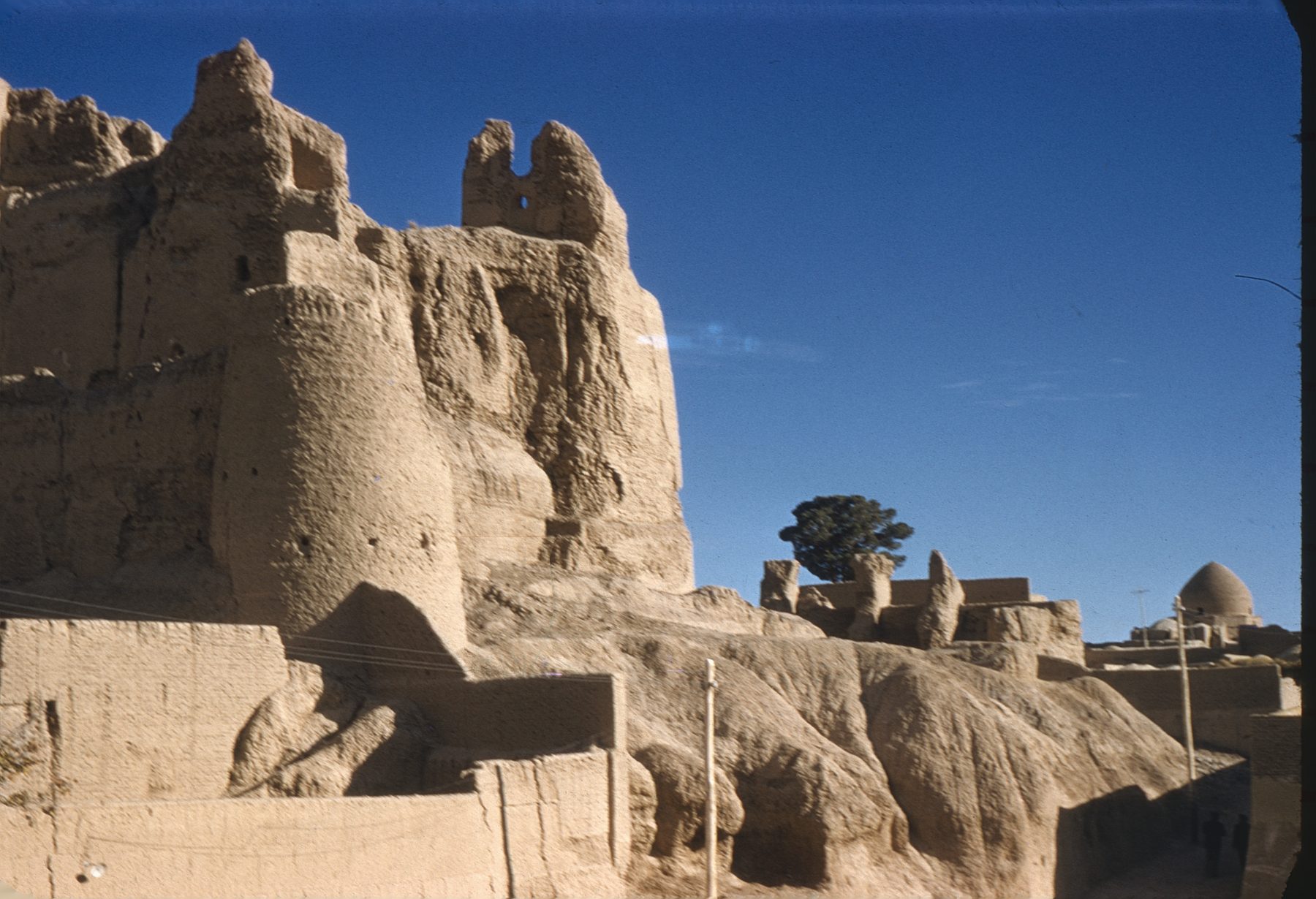 17
Eroded cliff and towers of the fortress of Nain (Narin Qaleh), deep blue sky, a small dome on the right.
Falaise et tours érodées de la forteresse de Nain (Narin Qaleh), ciel bleu intense, petit dôme à droite.
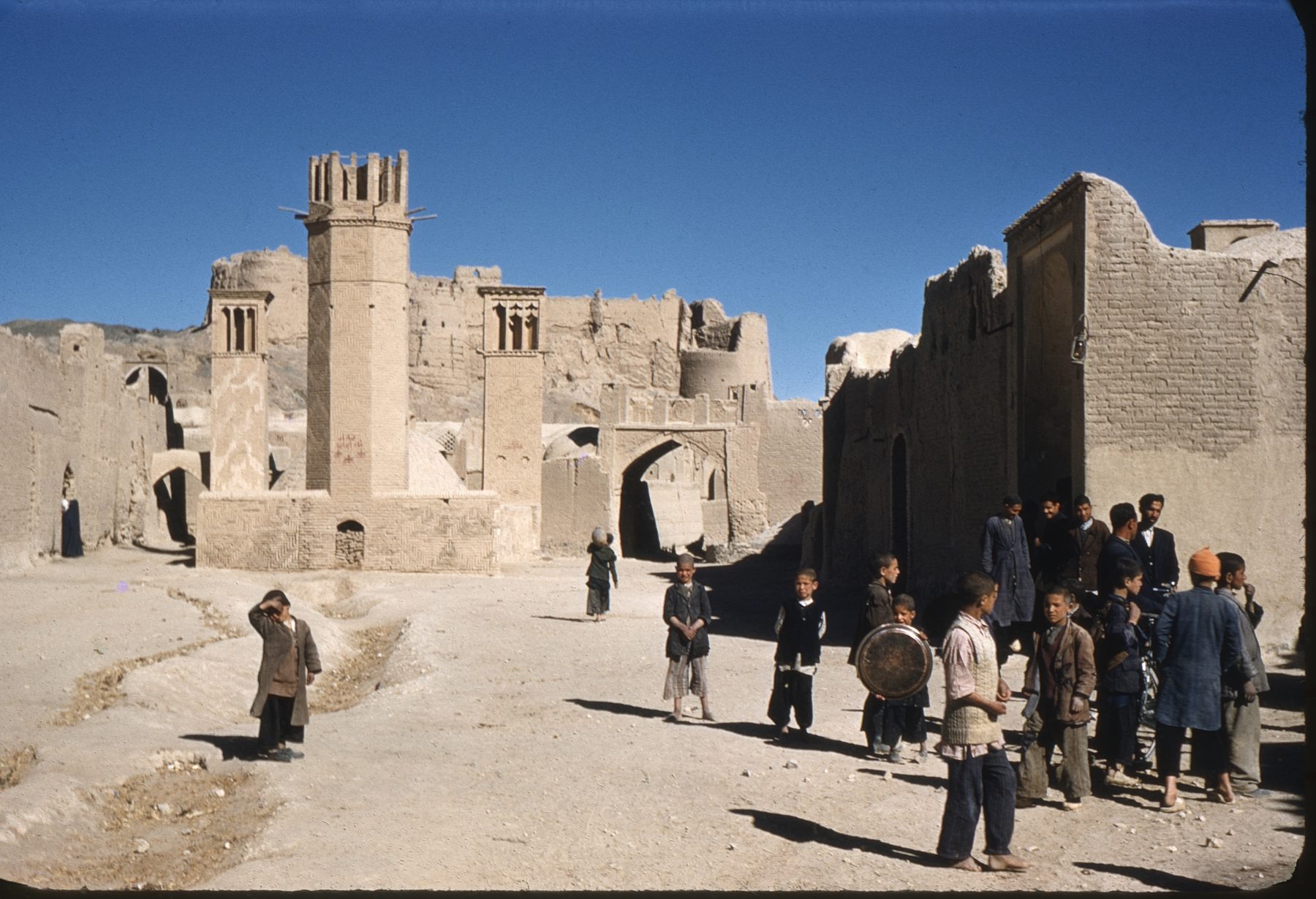 18
A beaten-earth street in Nain, low wind towers and an arched gateway, a group of boys, one holding a drum or round tray.
Rue du village de Nain en terre battue, tours basses à vent et porte voûtée, groupe de garçons dont l'un tient un tambour ou un plateau rond.
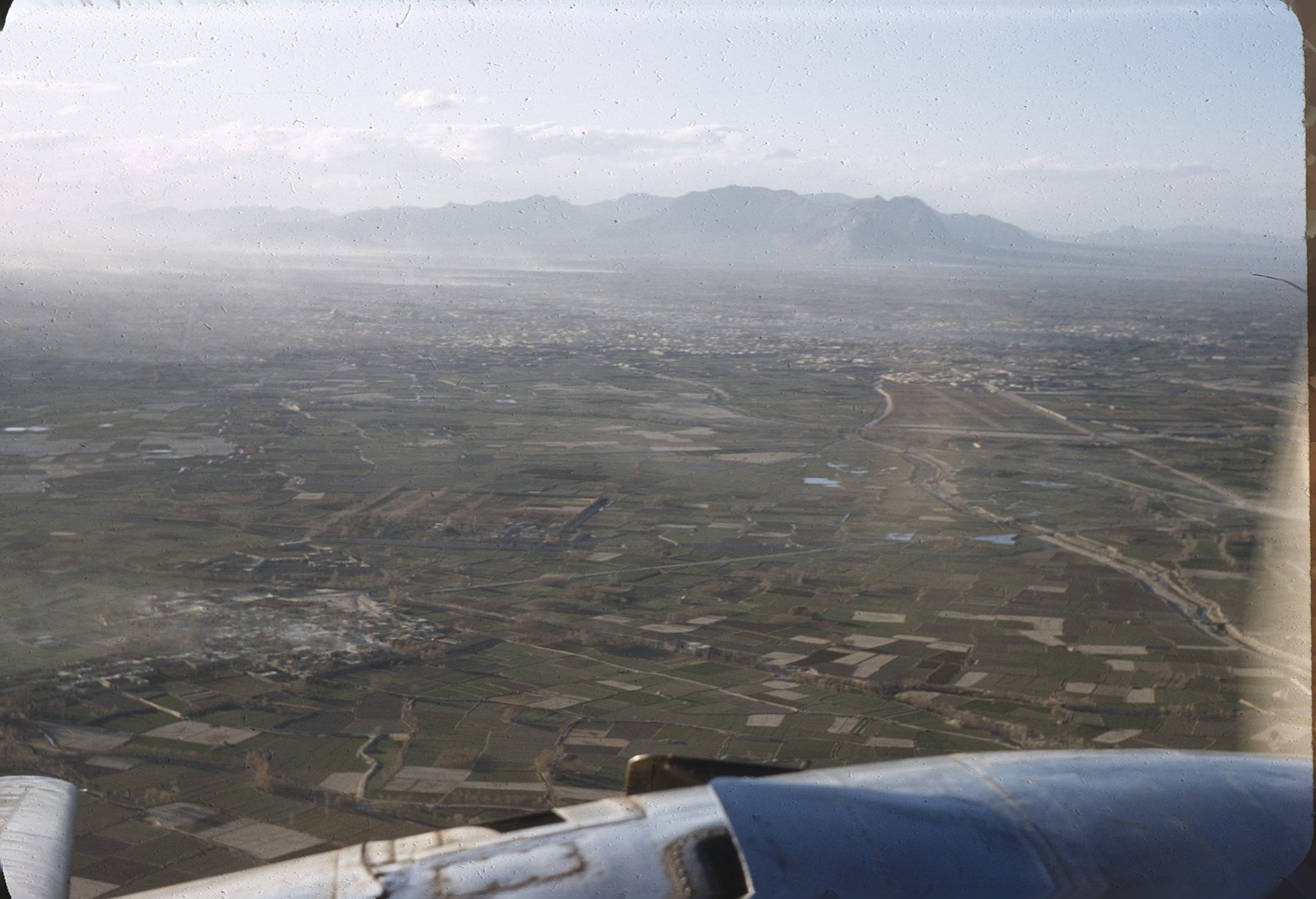 19
Aerial view of Isfahan: a patchwork of fields, roads, mountains in haze, an engine nacelle in the foreground.
Vue aérienne d'Ispahan : damier de champs, routes, montagnes dans la brume, nacelle de moteur au premier plan.
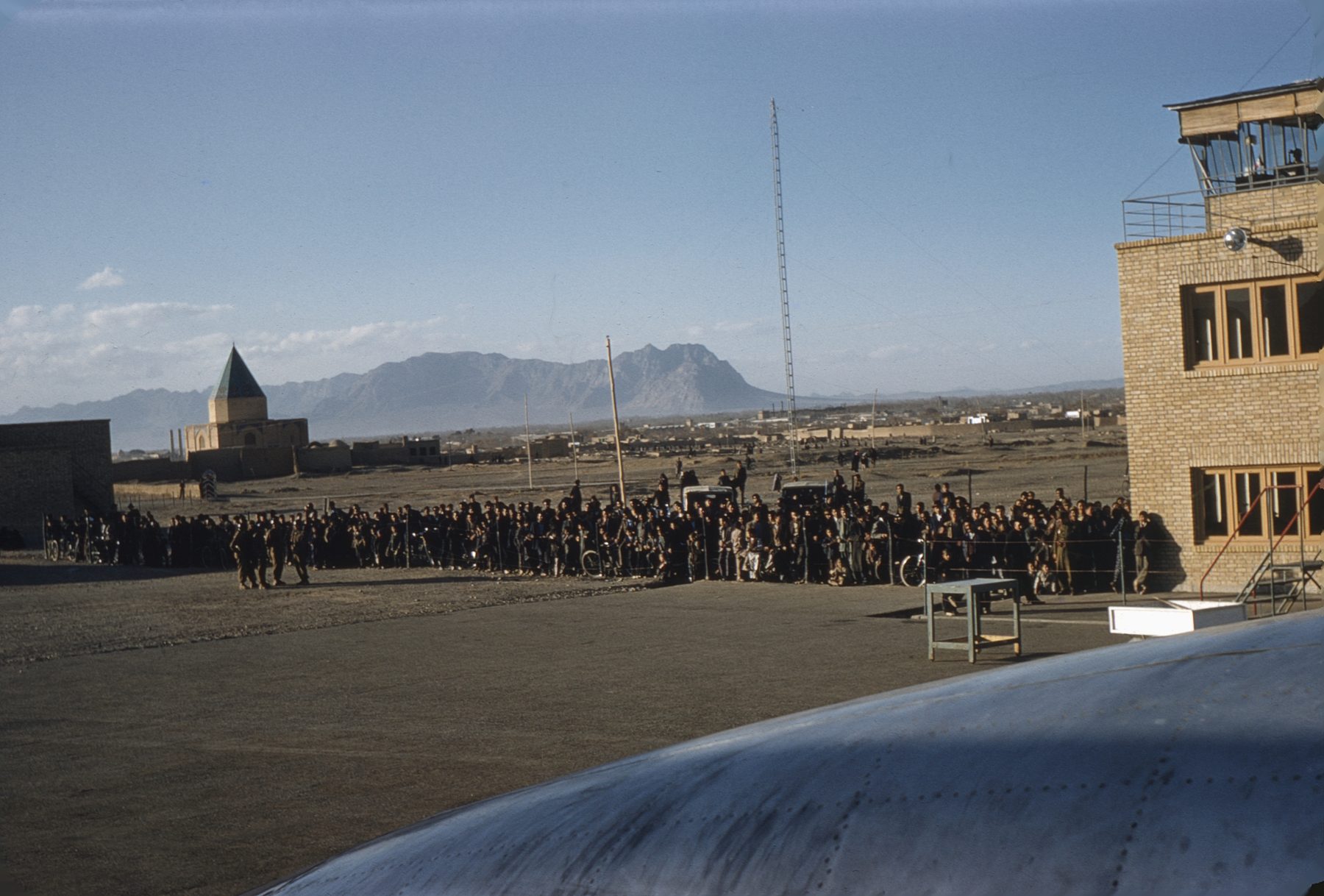 20
A crowd gathered on the tarmac in front of the control tower, a radio mast, a conical-roofed tomb and a mountain; the aircraft at the lower right.
Foule rassemblée sur le tarmac devant la tour de contrôle, mât radio, tombe à toit conique et montagne ; l'avion en bas à droite.
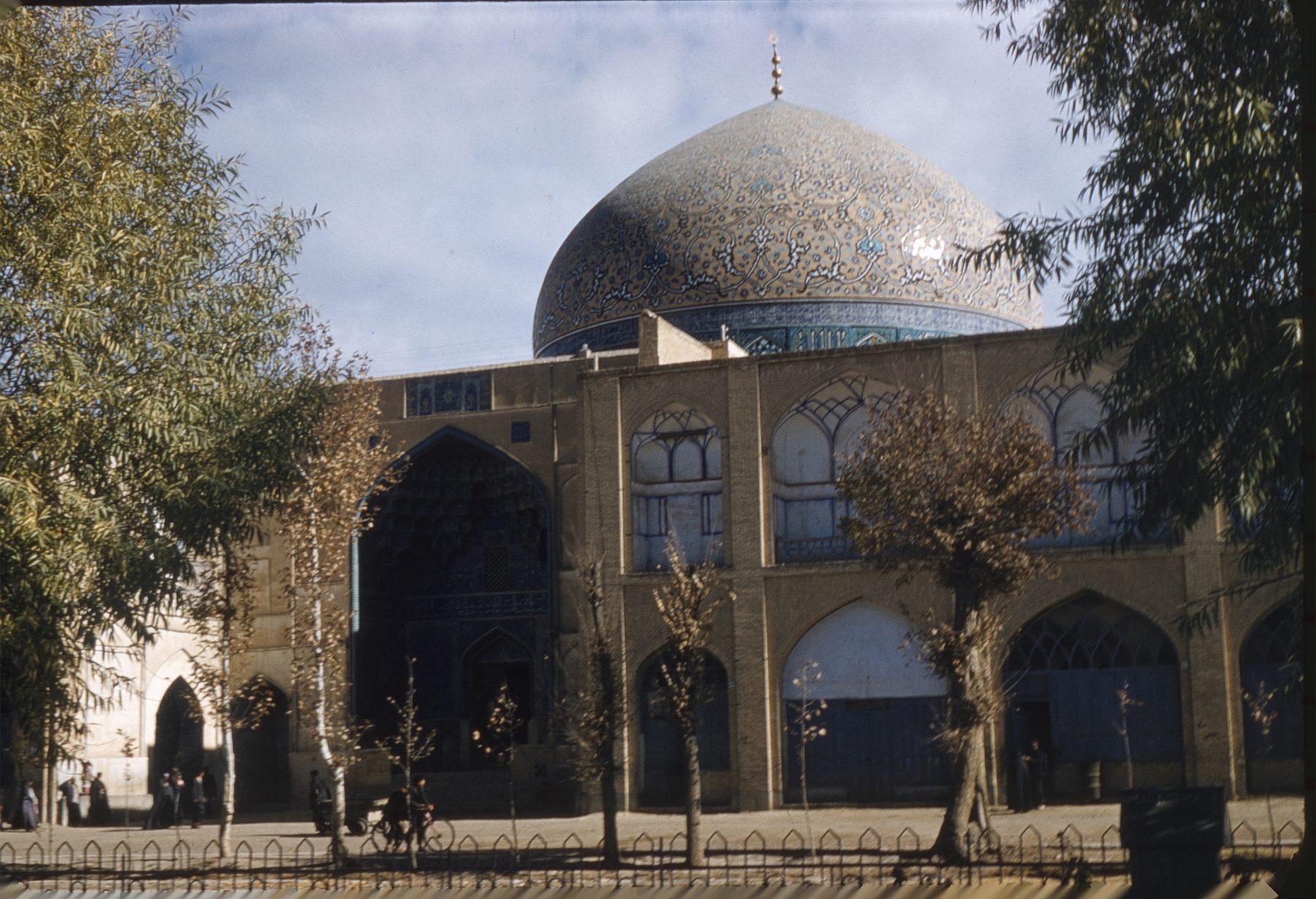 21
Arcaded facade of a seminary or mosque, blue-tiled dome, bare trees and a railing in the foreground.
Façade à arcades d'une école coranique ou mosquée, dôme à carreaux bleus, arbres dépouillés et grille au premier plan.